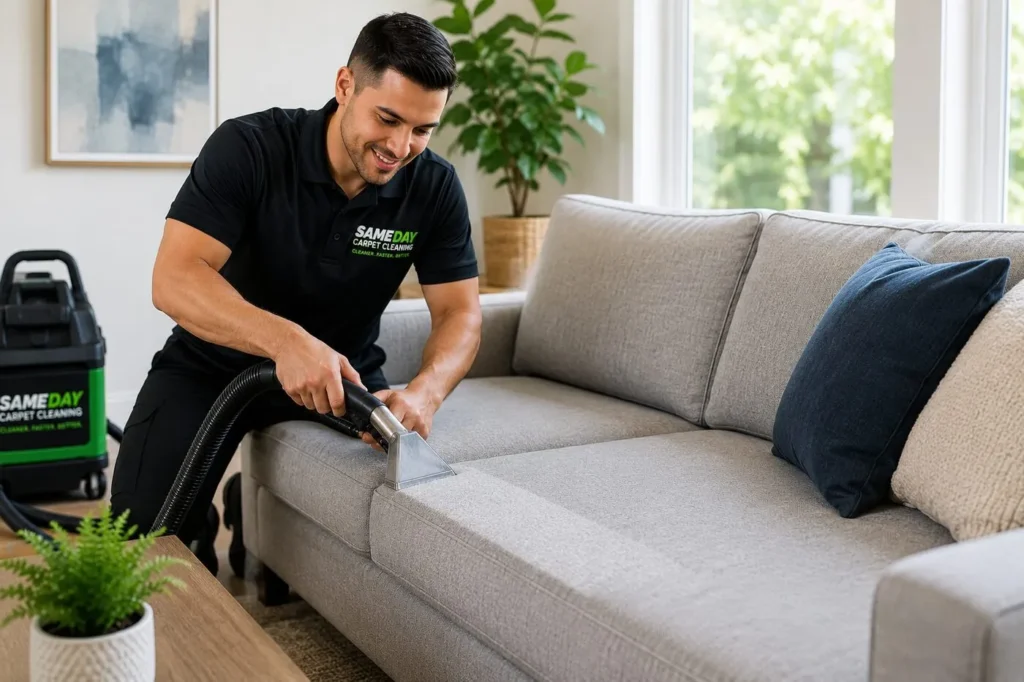
A good leather sofa can last for decades. It also shows neglect faster than most people expect. The arms turn dark and shiny. The seat cushions crack where the sun hits them every afternoon. The headrest picks up a gray line from hair and skin.
The good news is that leather is easy to keep in shape once you know what kind you have and what to keep away from it. This guide covers the basics for New York apartments, where radiator heat, dry winter air and big sunny windows are hard on leather. It also explains what a professional leather sofa cleaning includes and when it is worth calling one.
First, find out what kind of leather you have
“Leather” covers several very different materials. The right cleaner for one can stain another. Check the tag under the cushions or the paperwork from the store. If you cannot find either, these are the main types.
Protected (pigmented) leather
This is the most common leather on sofas. It has a colored coating on the surface, so the color looks even and the feel is a little smooth. It holds up well to kids, pets and daily use. Spills usually sit on top for a moment before they soak in.
Aniline leather
Aniline leather is dyed all the way through, with little or no coating on top. It feels very soft and shows natural marks, wrinkles and shade changes. It also soaks up spills, body oil and water quickly.
Nubuck and suede
These have a soft, brushed surface that feels almost like velvet. They mark easily and need dry methods and special brushes. Regular leather cleaners and conditioners can leave dark, matted patches on them.
Bonded leather and faux leather
Bonded leather is made from leather scraps pressed onto a backing, with a vinyl or polyurethane top layer. Faux leather is fully synthetic. Neither one needs leather conditioner, because there is no real leather surface to feed.
A quick test: put one small drop of water on a hidden spot, like the back of the sofa near the floor. If it beads up, the leather is most likely protected. If it soaks in and leaves a dark spot, it is most likely aniline. Blot it right away with a dry cloth. The spot should fade as it dries.
Simple weekly care
Most leather damage happens slowly, from dust, body oil and heat. A few minutes a week goes a long way.
- Dust with a dry microfiber cloth. Dust is slightly gritty. Wiping it off keeps the finish from wearing down.
- Vacuum the creases. Use the soft brush attachment along the seams, under the cushions and in the gaps where crumbs and pet hair collect.
- Wipe the arms and headrests. These spots get the most skin contact. On protected leather, a cloth barely damp with clean water is enough. Dry the area right after.
- Use a throw where heads rest. Hair products and skin oils are the main cause of dark patches on headrests and the tops of cushions.
What never to use on a leather sofa
Much of the damage we see on leather comes from cleaning with products people already have at home.
- Baby wipes and household wipes. Many contain alcohol or other ingredients that dry out and dull the finish over time.
- All-purpose sprays, glass cleaner and bleach. They can strip the color coat or leave light patches.
- Vinegar and rubbing alcohol. Both get suggested online. Both can dry out leather and lift the dye.
- Magic erasers. They work like very fine sandpaper. They take off the stain and the finish with it.
- Olive oil, coconut oil and other kitchen oils. They can darken leather, turn sticky and pull in more dirt.
If you are not sure about a product, test it on a hidden spot first and wait a day before you use it anywhere else.
How to handle spills and common stains
With leather, speed matters more than the product you use.
- Drinks and other liquids. Blot right away with a clean, dry, white cloth. Do not rub. On aniline leather, do not add water, which can leave a ring.
- Grease and food oil. Blot off what you can. Do not try to wash it out with soap and water, because oil spreads when it gets wet. On uncoated leather, oil stains usually need professional treatment.
- Ink. Fresh ballpoint ink on protected leather sometimes lifts with a cleaner made for leather. Skip the old tricks with hairspray or alcohol. They can take the color off along with the ink.
- Pet accidents. Blot well and get help soon. Urine can soak through the leather into the cushion foam, and the smell comes back if only the surface is wiped. Our guide on why pet urine smell comes back explains how that works.
Heat, sun and dry air: the NYC leather problem
In many prewar apartments, the sofa ends up against the only free wall, often right under a window with a radiator. That is about the worst spot for leather.
- Keep it away from radiators. Steam heat dries leather fast. Give the sofa a couple of feet of space if your layout allows it.
- Watch the sun. Strong afternoon light fades the color and dries out the tops of cushions and arms. Shades or a light throw on the sunny side help.
- Mind the winter air. Heated apartments get very dry in winter. A humidifier helps your leather as much as it helps you.
- Look for early signs. Fine lines, a dull look or a rough feel on the arms mean the leather is drying out. Conditioning at this stage helps. Once it cracks, the cracks stay.
How to condition a leather sofa
Conditioning puts back some of the moisture and oils that leather loses over time. It keeps the surface flexible, and flexible leather is much less likely to crack.
- Clean first. Conditioner put on over dirt seals the dirt in.
- Use a product made for your leather type. A conditioner for protected leather is not the same as one for aniline. Nubuck and suede need their own products.
- Test it. Try it on a hidden area and check the spot the next day.
- Use a small amount. Apply thin, even coats with a soft cloth. More is not better, and too much can feel sticky.
- Let it soak in, then buff. Give it time to absorb, then buff lightly with a clean, dry cloth.
Most leather sofas do well with a cleaning and conditioning once or twice a year. Do it more often if the sofa sits in the sun or near a radiator, or if it gets heavy daily use.
What a professional leather sofa cleaning includes
Leather is not cleaned like a fabric couch. There is no heavy steam and no hot water rinse. A good leather cleaning is careful and uses very little moisture. Here is what you should expect:
- Inspection and leather ID. The technician checks the type of leather, the finish, the color and any wear, cracks or old repairs, then tests in a hidden spot.
- Dry soil removal. Seams, piping and crevices are vacuumed first.
- Gentle cleaning. A pH-balanced leather cleaner is worked in with soft brushes or foam, one panel at a time, with extra attention on the arms, headrests and seat fronts.
- Residue removal. The loosened dirt and cleaner are wiped away, so nothing is left behind to attract new soil.
- Conditioning and protection. A conditioner or protector that suits your leather goes on last.
Our IICRC-certified technicians use organic products that are safe for kids and pets, and the sofa dries fast. If your couch is fabric, read what a professional fabric couch cleaning includes. You can see all our upholstery services on our sofa cleaning page.
One honest note: cleaning removes dirt and body oil and brings back softness. It cannot undo deep cracks, peeling bonded leather or color that has worn away. If we see damage like that, we will tell you before we start.
Getting ready for the visit
- Clear the sofa. Take off pillows and throws, and check under the cushions for coins, toys and remote controls.
- Tell us the history. Mention spills, pet accidents and any products you have already tried. It helps us choose the right method.
- Check your building’s rules. If your doorman or super needs notice for service visits, let them know ahead of time.
- Do it all at once. Many people clean the sofa together with the living room carpet or an area rug, especially before holiday guests arrive. See our carpet cleaning and rug cleaning services.
Frequently asked questions
How often should a leather sofa be cleaned and conditioned?
Once or twice a year works for most homes. Clean and condition more often if the sofa is near a radiator or a sunny window, or if kids and pets use it every day. Dust it and vacuum the creases once a week.
Can I use baby wipes on a leather couch?
It is better not to. Many wipes contain alcohol or other ingredients that slowly dry out and dull the finish. A dry microfiber cloth for dust, and a cleaner made for your type of leather for dirt, are much safer.
How soon can we use the sofa after a leather cleaning?
Leather cleaning uses very little moisture, so the sofa dries fast, usually within a few hours. Keep pets off until the conditioner has fully soaked in.
Can cleaning fix cracks or peeling on a leather sofa?
No. Cleaning and conditioning help prevent cracks, and they make dry leather look and feel better. They cannot reverse deep cracks or peeling bonded leather. We will tell you honestly what cleaning can and cannot do before we start.
How do I know if my sofa is aniline or protected leather?
Check the tag or store paperwork first. If you have neither, put one small drop of water on a hidden spot. If it beads up, the leather is most likely protected. If it soaks in and darkens, it is most likely aniline. Blot it dry right away.
Book your leather sofa cleaning in Manhattan
Manhattan Carpet Cleaning NYC is a family-run company at 153 W 53rd St that has been cleaning since 2005. Our IICRC-certified technicians have cleaned more than 4,500 homes. Learn more about us, or read what our customers say in our Google reviews.
Call us at (646) 970-4501. We are open 24/7, and same-day appointments are often available. Tell us the size and type of your leather sofa, and we will give you a clear price before we start. Carpet cleaning is $99 for 1 room, any size, and you save $20 when you book online.