A good Persian rug can last for generations. But it holds far more dirt than it shows. Fine grit sinks down to the base of the wool, and every step grinds it against the fibers like sandpaper. In a Manhattan apartment, one rug often covers the living room, the path to the kitchen and the spot by the radiator all at once. That wear adds up fast.
This guide walks through Persian rug cleaning in NYC the way it should be done, step by step. You will learn how to tell if your rug is hand-knotted, when it needs a real wash, what happens at each stage, and which shortcuts damage good rugs. For the day-to-day side, read our guide to Oriental and Persian rug care between cleanings.
First, is your rug a true Persian or Oriental rug?
The right cleaning method depends on how the rug is made. Flip one corner over and look at the back.
- Hand-knotted. The pattern shows clearly on the back, made of tiny separate knots. The rows are not perfectly even. The fringe is the end of the warp threads that run through the whole rug, not a strip sewn on.
- Machine-made. The back looks very even, almost like a grid. The fringe is often sewn or glued onto the ends.
- Hand-tufted. The back is covered with a canvas or cloth backing glued in place. These rugs look handmade from the front but are built very differently, and the glue can smell or break down if it gets too wet.
Most Persian and Oriental rugs have a wool pile on a cotton foundation. Some have silk details, and some are all silk or viscose, which is sometimes sold as “art silk.” Those need their own care, which we cover in our post on silk rug cleaning in NYC.
Signs your Persian rug needs a professional wash
- The tap test. Fold a corner back and tap the back of the rug with your hand. If dust falls out, the rug is holding deep grit.
- Colors look dull or gray, especially along walking paths.
- The rug smells musty, or like a pet, when the heat comes on or on a humid day.
- The pile feels stiff, flat or sticky.
- There are pet accidents, food spills or old spots you have been hiding under a chair.
- It has been more than a couple of years since its last real wash.
As a rough guide, a rug in a busy living room or hallway, or in a home with pets or kids, does best with a wash every one to two years. A rug in a quiet bedroom can go longer.
How professional Persian rug cleaning works, step by step
A real rug wash is a process, not a quick pass with a wand. Here is what each step does and why it matters.
Step 1: Inspection
The rug is checked front and back in good light. A careful cleaner notes the fiber, the weave, worn areas, loose edges, fringe damage, moth damage, old repairs and stains. This is when you should hear about anything that may not come out, before any water touches the rug.
Step 2: Dye testing
Reds, dark blues and some newer dyes can run. Each main color is tested with a damp white cloth and a little cleaning solution. If a color moves, the wash is adjusted, with cooler water, a milder solution and faster drying, so the colors stay where they belong.
Step 3: Dusting
This is the step most people never see, and it may be the most important one. Before any water, the rug is beaten or vibrated from the back to shake out the dry grit packed into the base of the knots. A regular vacuum only reaches the top of the pile. Washing a rug that is still full of grit turns that grit into mud.
Step 4: Pre-treatment
Spots, pet areas and traffic paths get a treatment matched to the stain and safe for wool. Pet urine soaks through to the foundation, so those spots may need a longer treatment or a soak. Our post on why pet urine smell comes back explains what is going on under the surface.
Step 5: Gentle washing
The rug is washed with a mild, wool-safe shampoo and soft brushing in the direction of the pile. Strong alkaline cleaners, bleach and hard scrubbing can strip the natural oils from wool, fuzz the fibers and fade the colors, so they have no place here.
Step 6: Thorough rinsing
Every bit of shampoo has to come out. Soap left in the wool feels sticky and grabs dirt, so the rug gets dirty again faster. Rinsing goes on until the water runs clear.
Step 7: Water removal and drying
Most of the water is pulled out right away. Then the rug dries with steady airflow until it is fully dry, including the thick foundation. Slow drying is what causes musty smells, mildew and brown spots, so this step is never rushed.
Step 8: Fringe and finishing
The fringe is cleaned by hand and brushed straight. The pile is groomed so it lies in one direction, and the rug gets a final check before it goes home.
In your home or at a rug plant?
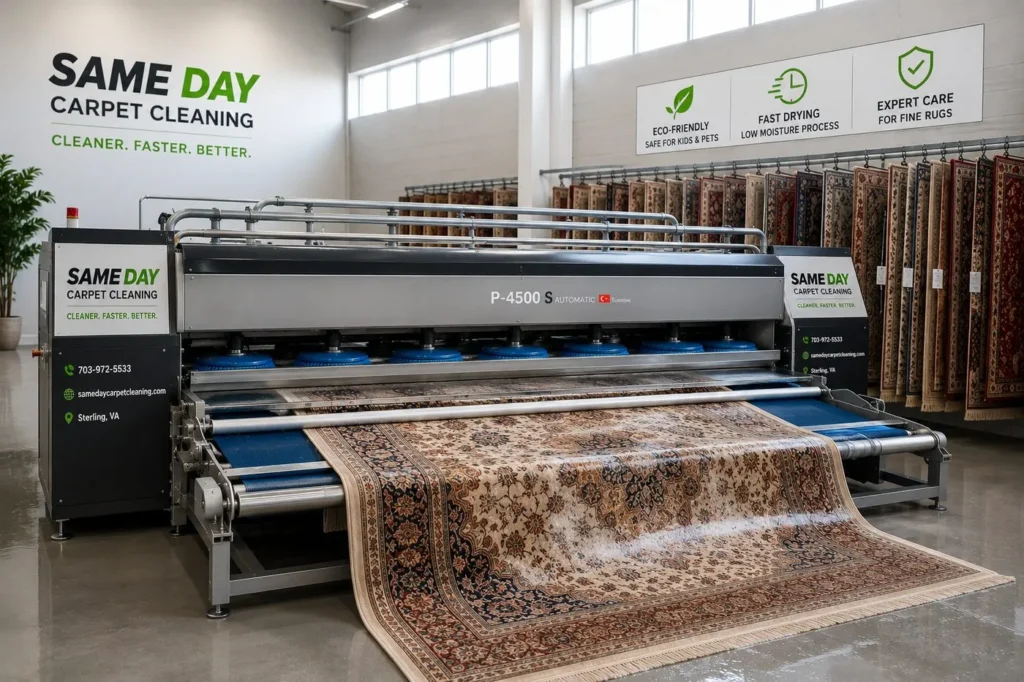
Some rugs can be cleaned well right in your apartment. Many fine wool rugs, silk rugs and any rug with heavy pet urine do better with a full wash at a rug plant, where dusting, soaking, rinsing and drying can all be done properly. Our post on in-home vs. plant washing for area rugs in Manhattan explains how to decide. Our rug cleaning team will look at your rug and tell you which way makes sense. Call us to ask about pickup and delivery.
Shortcuts that damage Persian rugs
- Rental machines and steam cleaners. Too much water and soap on a hand-knotted rug can cause dye bleeding, shrinking and brown stains.
- Bleach, oxygen cleaners and strong stain sprays. They can pull color out of wool and leave a light spot that can’t be fixed.
- Drying it flat on a wood floor. Water trapped under the rug can damage both the rug and the floor.
- Scrubbing a stain hard. It opens up the fibers and spreads the spot. Blot instead.
- Putting a damp rug back under furniture. Wet wood and metal legs can leave rust or stain marks.
- Pulling a loose knot or fringe thread. It can unravel more of the rug. Don’t pull or trim anything. Let a pro check it.
NYC apartment tips that help a clean rug last
- Use a good rug pad. It stops sliding, cuts wear and protects the floor underneath.
- Turn the rug every six months or so. That way sun from the window and foot traffic don’t always hit the same side.
- Check for moths. Look under beds, sofas and dressers for bare spots, loose tufts or thin silky webs. Moths like dark, quiet corners of wool rugs.
- Watch the radiator and sunny windows. Steady heat and strong sun can dry out wool and fade colors. Our post on radiator heat and rugs in prewar apartments has more on this.
- Vacuum gently. Turn the beater bar off or use the suction tool, and keep the vacuum away from the fringe.
- Blot spills right away with a clean white cloth and plain water. Then call us before you reach for a stain spray.
Frequently asked questions
How much does Persian rug cleaning cost in NYC?
It depends on the rug’s size, fiber and condition, and on whether it needs extra work such as a pet urine treatment. Call us with the size and type of rug and we will give you a quote before any work starts.
Can I wash a Persian rug at home?
Light care, yes. Vacuum it gently and blot spills right away. A full wash at home is risky. It is hard to rinse out all the soap and to dry the thick foundation, and that can lead to dye bleeding, brown stains and mildew.
How often should a Persian rug be cleaned?
Every one to two years for a rug in a busy room or a home with pets or kids. A rug in a low-traffic room can go longer. Pet accidents and big spills should be handled right away, not saved for the next wash.
Will professional cleaning fade my rug’s colors?
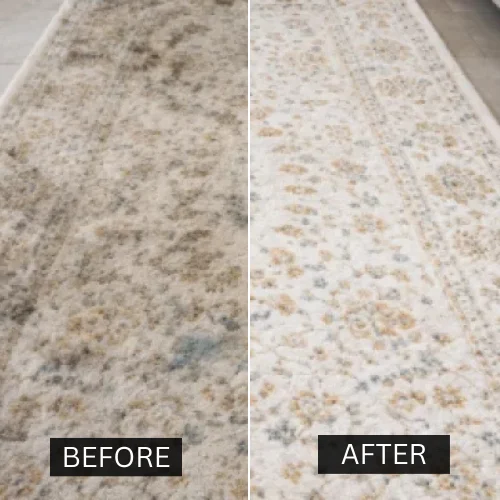
A careful cleaning with dye testing and wool-safe products should not fade a rug. Colors often look brighter afterward because the gray layer of grit is gone. If a rug has unstable dyes, a good cleaner tells you before washing and adjusts the method.
Is rug cleaning safe for kids and pets?
With us, yes. We use organic products that are safe for kids and pets, and we rinse thoroughly so no sticky residue is left in the wool.
Get your Persian rug cleaned the right way
Manhattan Carpet Cleaning NYC is a family-run company at 153 W 53rd St, cleaning since 2005. Our IICRC-certified technicians have cleaned more than 4,500 homes across Manhattan and all five boroughs, and we use organic products that are safe for kids and pets. Learn more about us, or read what customers say in our Google reviews.
Call (646) 970-4501. We are open 24/7, and same-day appointments are often available. While we take care of your rug, we can also clean your wall-to-wall carpet and your sofa. Carpet cleaning is $99 for 1 room, any size, and you save $20 when you book online.