Microfiber and velvet couches are everywhere in New York apartments. They feel soft, they look good in a small living room, and they come in every color. But when something spills, many people freeze. Can you use water? Will a cleaner leave a ring? Will scrubbing crush the fabric?
Those are fair questions. Both fabrics have a soft surface of tiny fibers, and both react badly to the wrong product or too much rubbing. This guide explains what microfiber and velvet really are, how to read the cleaning code, what is safe to use at home, what to avoid, and when it is time to call a pro.
What microfiber and velvet really are
Microfiber is a man-made fabric, usually polyester or a polyester and nylon blend. The fibers are extremely thin and packed close together, which gives it that suede-like feel. It resists many spills at first, which is why it is popular with families and pet owners. But the tight surface also shows water marks, and the short pile can get matted and stiff.
Velvet is not one fiber. It is a weave with a short, dense pile standing up from the backing. That pile can be made of cotton, polyester, rayon (viscose), silk or mohair. The fiber matters a lot:
- Polyester velvet is the toughest. It handles careful cleaning well and is common on newer sofas.
- Cotton velvet is soft and breathable but can shrink, fade and water-mark.
- Rayon or viscose velvet has a beautiful shine but is very sensitive to water. It can spot, stiffen and lose its sheen.
- Silk and mohair velvet are high-end fabrics. They need the most caution and are best left to professionals.
If you are not sure what your sofa is made of, check the tag under the cushions or the paperwork from the store. Don’t guess. The same cleaner that works on polyester can ruin rayon.
Read the cleaning code first
Most sofas have a small tag with a letter code. It tells you what kind of cleaning the fabric can take:
- W – water-based cleaners are OK.
- S – solvent cleaners only. Water can leave rings or stains.
- W/S – either can work, used carefully.
- X – vacuum and brush only. No water, no solvent.
Many microfiber couches carry an S code, even though the fiber itself is polyester. That is because water tends to leave marks on the tight surface. Velvet codes vary with the fiber. Whatever the code says, follow it. And always test on a hidden spot first, like the back of the skirt or the underside of a cushion.
What is safe to use on microfiber
For most everyday spots on microfiber, simple tools work best:
- A vacuum with a soft brush attachment. Dry dust and crumbs come first. Cleaning a dusty couch with liquid just makes mud.
- White cloths or white microfiber towels. Colored towels can transfer dye onto light fabric.
- Rubbing alcohol on S-coded microfiber. Many owners lightly mist plain isopropyl alcohol on a spot and blot it with a white cloth. It dries quickly, so it leaves fewer water rings. Test first, use it in a ventilated room, keep it away from flames and heat, and never soak the fabric.
- A drop of clear, gentle dish soap in distilled water on W-coded microfiber. Distilled water has no minerals, so it is less likely to leave a ring as it dries.
- A soft-bristle brush. Once the spot is fully dry, brush the area in small circles to lift the pile so it matches the rest of the cushion.
Why microfiber gets water rings
When a wet spot dries, the moisture moves to the edges and carries dissolved dirt and minerals with it. That leaves a darker outline. The fix is to use less liquid, blot often, and feather the edges outward with a barely damp cloth so there is no hard line. If a ring is already there, cleaning the whole cushion panel evenly usually works better than chasing the spot.
What is safe to use on velvet
Velvet is all about the pile. Your goal is to clean without crushing it.
- Vacuum gently with the brush attachment, using low suction and moving in the direction of the nap. Run your hand over the fabric. The smooth direction is the way the nap lies.
- Blot spills right away with a clean white cloth. Press, lift, and repeat. Do not rub.
- For W-coded polyester velvet, a cloth barely dampened with distilled water and a tiny bit of mild soap can lift fresh spots. Follow with a cloth dampened with plain water, then let it air dry.
- For crushed pile on polyester or cotton velvet, light steam held a few inches away can help the fibers stand back up. Brush gently with the nap while it is still slightly warm. Skip this on rayon, silk and mohair.
- A lint roller or a damp rubber glove pulls pet hair off velvet without dragging the pile.
What to avoid on both fabrics
A lot of damage on these couches comes from well-meant home fixes. Avoid these:
- Soaking the fabric. Extra water sinks into the cushion foam, causes rings and can leave a musty smell.
- Scrubbing hard. It frays microfiber and permanently flattens velvet. Blot instead.
- Bleach and oxygen bleach. They can strip color in seconds.
- Melamine sponges (“magic erasers”). They work like very fine sandpaper and can wear the surface away.
- A hot hair dryer up close. High heat can set a stain or distort synthetic fibers. Let spots air dry, or use a fan.
- Washing the cushion covers in a machine. Zippers on covers are usually there for the factory, not for laundry. Covers can shrink or fade, and then they no longer match the rest of the sofa.
- Mixing products. Using one cleaner after another can leave sticky residue or create a stain that is harder to remove.
Quick steps for common spills
- Coffee or tea: Blot right away with a dry white cloth. On S-coded microfiber, mist lightly with rubbing alcohol and blot. On W-coded fabric, blot with a little mild soap in distilled water, then plain distilled water.
- Grease from takeout: Lightly cover the spot with cornstarch or baking soda, let it sit, then vacuum. Test before using any liquid.
- Ink: Dab carefully with rubbing alcohol on a cotton swab, only on fabric that tolerates solvent. Work from the outside in so it does not spread.
- Pet accidents: Blot up as much as you can and avoid harsh chemicals. Urine soaks into the cushion, so the smell often stays even when the top looks clean. Our guide on why pet urine smell comes back explains how enzyme treatment works.
If a stain does not move after a couple of gentle tries, stop. More product and more scrubbing usually make it worse. For more on fast first aid, see our guide to red wine, coffee and takeout spills in the first 10 minutes.
When to call a professional
Home care keeps a couch looking good, but some jobs need professional tools and experience:
- The whole couch looks dull, gray or greasy on the arms and headrest.
- There is a water ring you made worse by trying to fix it.
- The fabric is rayon, silk, mohair or coded X.
- There is a pet urine smell or a large spill that soaked into the cushion.
- The pile is matted all over, not just in one spot.
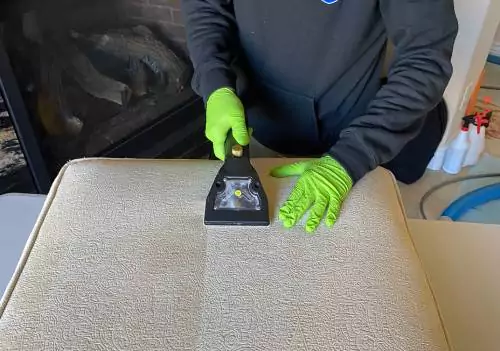
A professional sofa cleaning starts with an inspection and a fiber check. The technician tests a hidden area, picks a method that matches the cleaning code, controls the moisture, and grooms the pile so it dries even. With low moisture and good air flow, the couch dries fast, usually within a few hours. You can see each step in our guide to what a professional couch cleaning includes. If you also own a leather piece, read our tips on cleaning and conditioning leather, because it needs a completely different approach.
How to keep microfiber and velvet looking new
- Vacuum once a week with the soft brush, including under the cushions.
- Flip and rotate cushions so they wear and fade evenly.
- Keep the couch out of strong direct sun. Velvet and dark microfiber fade fast near a bright window.
- Keep it a little away from the radiator. In many prewar apartments the couch sits right next to one, and constant dry heat stiffens fibers over the winter.
- Use a throw on the spot where the dog or cat likes to sit.
- Brush the pile now and then to keep it soft and even.
- Get a deep cleaning about once a year, or more often with kids, pets or allergies.
Many people plan the couch together with the floors. When the sofa, the carpet and the area rug are all clean, the whole room feels fresh, and you only plan one visit.
Frequently asked questions
Can I use water on a microfiber couch?
Only if the cleaning code is W or W/S. Many microfiber couches are coded S, which means water can leave rings. When water is allowed, use very little, choose distilled water, and blot rather than rub.
Is rubbing alcohol safe on microfiber?
On many S-coded microfiber couches, a light mist of rubbing alcohol is a common way to lift spots, because it dries quickly. Always test a hidden area first, keep the room ventilated, and stay away from heat and flames. Do not use it on velvet without testing.
How do I fix crushed velvet?
On polyester or cotton velvet, hold a steamer a few inches away, then brush gently with the nap. Do not press the steamer onto the fabric. Rayon, silk and mohair velvet are more delicate, so call a professional for those.
How long does a professionally cleaned couch take to dry?
Because the moisture is controlled, couches dry fast, usually within a few hours. A fan or an open window helps.
Are your products safe for kids and pets?
Yes. We use organic products that are safe for kids and pets.
Call Manhattan Carpet Cleaning NYC
Manhattan Carpet Cleaning NYC is a family-run company based at 153 W 53rd St in Midtown, cleaning since 2005. Our IICRC-certified technicians have cleaned more than 4,500 homes, and we serve Manhattan and all five boroughs. Learn more about us, or read what customers say in our Google reviews.
Call us at (646) 970-4501 and tell us about your microfiber or velvet couch. We are open 24/7, and same-day appointments are often available. Carpet cleaning is $99 for 1 room, any size, and you save $20 when you book online.